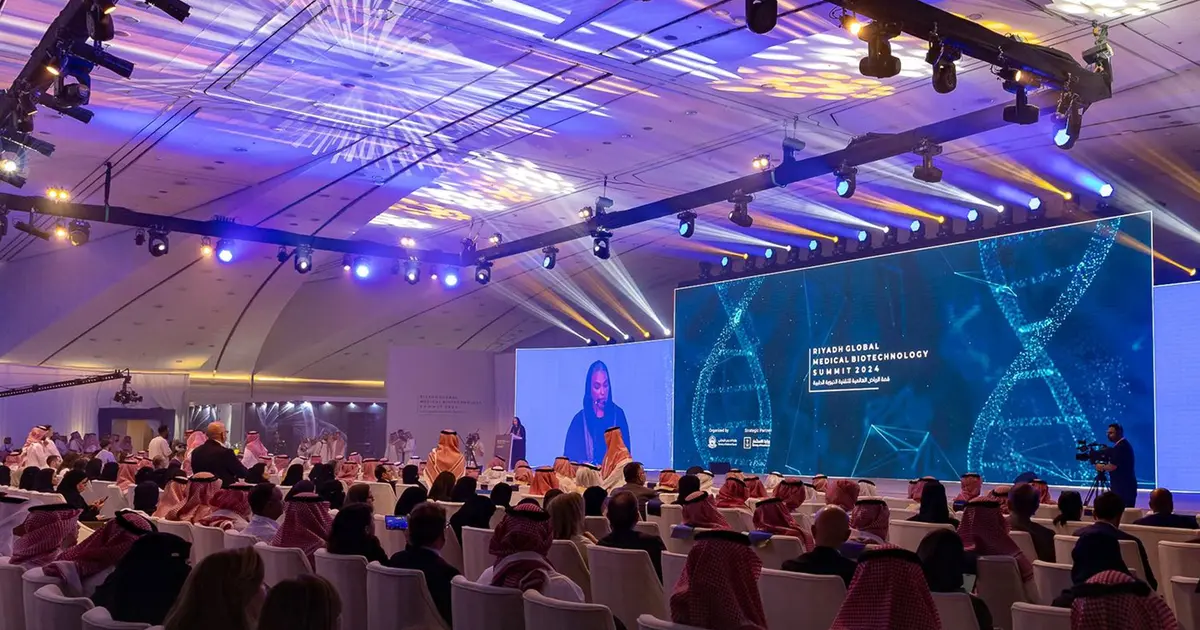
The fourth edition of the Riyadh Global Medical Biotechnology Summit 2026 wrapped up in the Saudi capital with more than 40 agreements, initiatives and investment projects signed, carrying an estimated value exceeding SAR 5 billion, according to a report by Alweeam. The outcomes are geared towards localising advanced pharmaceutical industries and maximising their preventive and economic impact.
Held from 14 to 16 September under the patronage of Crown Prince Mohammed bin Salman bin Abdulaziz Al Saud, Prime Minister, the summit was inaugurated by Prince Abdullah bin Bandar bin Abdulaziz, Minister of the National Guard. It was organised by the Health Affairs of the Ministry of the National Guard, King Saud bin Abdulaziz University for Health Sciences and King Abdullah International Medical Research Center, in strategic partnership with the Ministry of Investment and the Future Investment Initiative Foundation.
Dr. Bandar bin Abdulmohsen Al-Qanawi, Executive Director General of the Health Affairs of the Ministry of the National Guard and Chairman of the Summit, expressed gratitude to the Crown Prince for his support and patronage of the gathering, and valued the Minister of the National Guard's backing and follow-up of the scientific sessions. He stressed that the summit's outcomes align directly with the objectives of the National Biotechnology Strategy by linking medical research output to financing opportunities, expanding alliances with international organisations and building specialised national talent.
The sessions drew delegations and specialists from more than 57 countries, with over 200 speakers from academic leadership and researchers, while registered attendees and visitors surpassed 15,000. The scientific programme featured more than 80 dialogue sessions alongside 7 executive sessions focused on artificial intelligence research, genomics, vaccine manufacturing, bioproduction, advanced therapeutics, investment attraction and talent development.
The accompanying exhibition, spanning over 6,000 square metres, hosted more than 120 exhibiting and sponsoring entities, including official pavilions from Spain, China, Japan, Germany, the United States and South Korea, showcasing the latest therapeutic systems and opening direct channels between research bodies and investors. The Life Sciences Innovation Forum attracted 5 specialised investment funds ready to inject more than USD 120 million into supporting startups, while the Next Generation Biotechnology Forum was dedicated to empowering early-career researchers and scientists.