

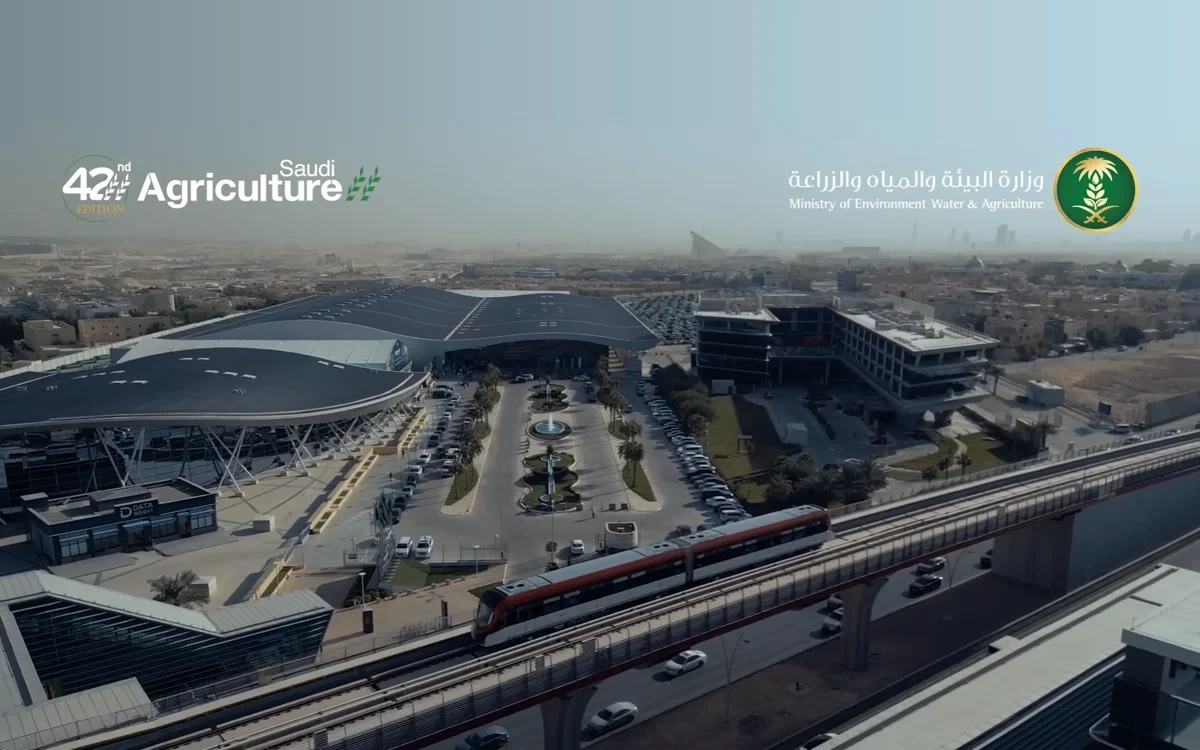
The Saudi Agriculture 2026 concluded in Riyadh after four days of debate on the future of the Kingdom's farming and food sectors, with food security, supply-chain stability, local production growth and sustainable farming practices dominating the agenda alongside the use of modern technology to raise output efficiency and rationalise resource use. The exhibition, held from 19 to 22 October under the patronage of the Ministry of Environment, Water and Agriculture, drew 330 exhibitors from 28 countries, according to the organisers, bringing together companies, investors and specialists from inside and outside the Kingdom.
Speaking on the sidelines of the event, Dr. Sulaiman Al-Tuwaijri, chief executive of the National Agricultural Development Company (NADEC), said the Kingdom maintains advanced levels of food security, pointing to the continued availability of food products in markets as evidence of the efficiency of the supply system and the ability of production sectors to meet consumer demand. He noted that the stability of supplies remains a priority given geopolitical and economic shifts, and that Saudi agricultural and food output reaches regional markets as well as domestic ones, strengthening the Kingdom's role in supporting Gulf food security.
Organic farming emerged as one of the most promising areas for agricultural investment as consumer interest in the quality and origin of food products grows. Abdullah Al-Tuwaijri, an investor in organic production, said his project in Al-Jouf includes about 55,000 olive trees and focuses on the quality of extra-virgin olive oil, arguing that the shift toward organic methods is tied to production practices that respect food quality and certified standards rather than to crop selection alone. «The increase in the cost of the organic product is about 30%,» he said, attributing the gap to different production methods and inputs and to lower yields in some cases.
He called on consumers to verify the labels and identification data carried on organic products and to confirm that they meet the regulatory accreditation requirements, noting that the use of organic-specific marks is subject to defined conditions and procedures. He also stressed that judging food should not rest on price alone but on quality, production methods and compliance with approved standards, and that growth in the organic market depends on greater public awareness, stronger producer capabilities and consumer confidence in certified brands.
The discussions framed food security as an integrated system extending beyond the availability of goods in markets to include food quality and safety, the sustainability of production, and the efficiency of storage, transport and distribution, with attention to oversight across production and handling stages, the sound use of agricultural inputs and practices that preserve water and soil. The integration of local production, supply chains and modern technologies was presented as a central route to a more competitive and resilient agricultural sector.