

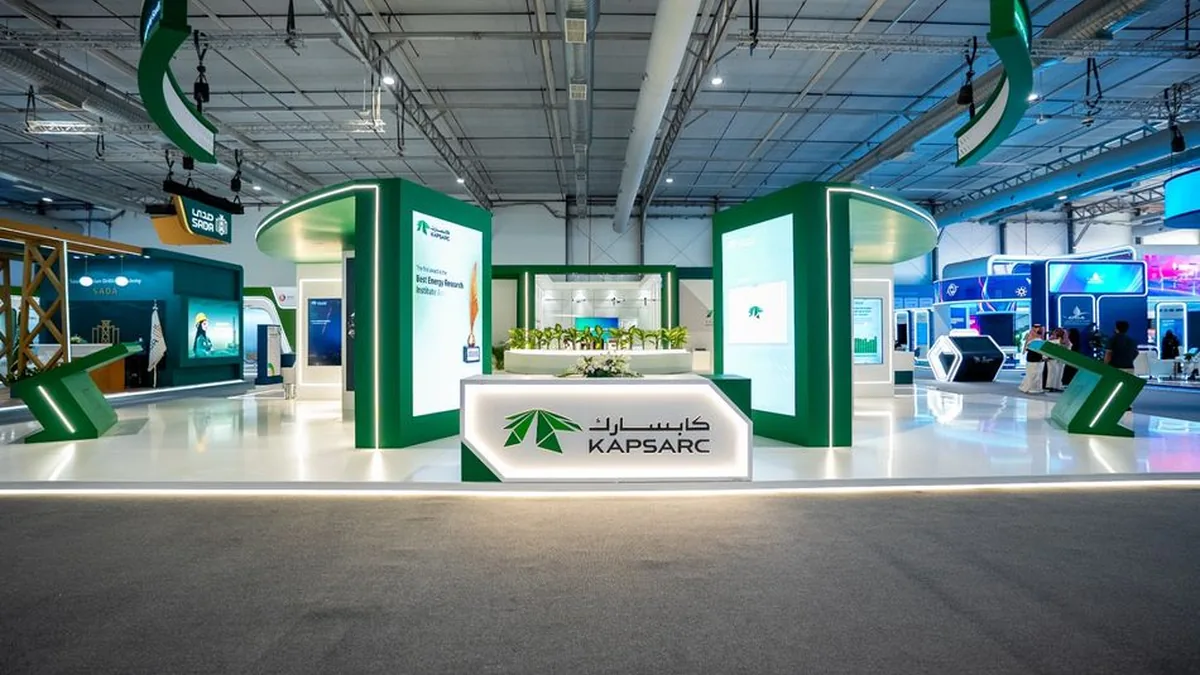
Concluded KAPSARC its role as a National Partner at the 25th WPC Energy Congress, which Riyadh hosted across five days ending 15 October 2026 under the slogan “Pathways to an Energy Future for All,” in a session that carried special weight as the first time the Kingdom has staged the gathering since its launch in London in 1933.
The center's closing balance sheet went beyond presence, with two Best Paper Awards recognizing research presented during the congress. One went to Olivier Durand-Lasserve, Abdullah Aljarboua, Ryan Alyamani and Amit Kanudia for a paper on petrochemicals in the energy transition built on a global bottom-up energy model, filed under the Energy Fuels and Molecules – Future Pathways track, while Aayushi Awasthy took the second for work comparing methodologies, market models and mitigation outcomes in carbon finance for clean cooking in Africa, within the Energy Leadership – Future Pathways track.
Recognition also came at the institutional level, as Prince Abdulaziz bin Salman bin Abdulaziz, Minister of Energy and Minister of Industry and Mineral Resources, honored the center for its National Partner role and for hosting the Energy Hackathon, which the Ministry of Energy organized as a platform for developing solutions to sector challenges. More than 20 KAPSARC leaders and experts fed into 18 sessions and scientific activities distributed across the congress's four main programmes — Executive, Technical, Synergy and Special — alongside side events on energy security, investment, technology and sustainability.
In the Executive Programme, KAPSARC President Fahad Alajlan took part in a panel on oil market fundamentals and investment decisions, where he framed the Kingdom's spare capacity as an economic asset. «Saudi Arabia has invested significantly in maintaining spare oil production capacity, even when it remains unused. This provides substantial value to the global economy, particularly during periods of heightened uncertainty.» He later opened the third Symposium on Pathways to Reduce Carbon Emissions in the Petroleum Downstream Industries (SPRCEPDI 2026), organized by OAPEC on the congress margins, where he argued for reconciling energy security with sustainability and for economically viable emissions-reduction paths, drawing on the center's work in efficiency, waste-heat recovery, carbon capture and utilization, and its Circular Carbon Economy Index.
Across the remaining programmes, the center ran a Knowledge Sprint on generative AI in oil-market analysis and a World Café on carbon dioxide removal, and its experts joined sessions spanning supply and demand, energy access, governance, the Circular Carbon Economy, artificial intelligence, transportation, and emissions reduction in refining and petrochemicals.